Major Rail and Road Milestones Strengthen Transport Connectivity in Slovakia
January 2026 marks an important moment for transport infrastructure in northern Slovakia. Two major projects in the Žilina region have reached key milestones: the completion of the Žilina Rail Hub, the largest railway construction project in the country’s history, and the official start of the construction of a new section of the D3 highway towards Kysucké Nové Mesto. Together, these developments significantly enhance regional, national and international connectivity.
Žilina Rail Hub Completed
On 22 January 2026, the largest railway construction project in Slovakia’s history was officially completed. The Žilina Rail Hub is now fully operational and is set to bring substantial improvements to transport across the entire region.
As part of the project, 14 kilometres of railway line in the east–west direction and 2.3 kilometres in the north–south direction were modernised. The tracks were replaced, and new pedestrian underpasses with escalators and lifts were constructed, providing passengers with barrier-free access to six renovated platforms and improved connections between the station and nearby sports stadiums.
“Today we completed the modernisation thanks to which passengers now have access to a fast, safe and comfortable railway line from Bratislava beyond Žilina. Improving the condition of railway infrastructure is our priority, and this represents a major leap in quality. We are pleased that the Žilina rail hub is completed and I believe it will serve passengers well,” said Jozef Ráž, Minister of Transport of the Slovak Republic.
The project also included the widening and raising of the Kysucká Street underpass, significantly improving commuting from the Kysuce region to Žilina. In addition, a new traffic control workplace has been established in Žilina as a basic unit for the future Žilina dispatching centre.
“We have put new modern signalling and safety technologies into operation. The modernisation also includes the implementation of the ETCS Level 2 system, which will significantly increase transport safety,” said Miroslav Garaj, CEO of the Slovak Railways Infrastructure Manager.
The contractor was the Pod Dubňom Association, with a total contract price of EUR 318 million. The project was financed from EU funds, including the Connecting Europe Facility (CEF). According to Denisa Žiláková, State Secretary at the Ministry of Transport, it is also the largest EU-funded construction project in Slovakia’s history, financed through the Operational Programme Integrated Infrastructure (OPII), the Connecting Europe Facility (CEF) and the Slovakia Programme.
Although the railway part of the project has been completed, construction activity around the station will continue. The completion of a new road overpass, which will significantly ease traffic in the wider centre of Žilina, is planned for the end of 2026.

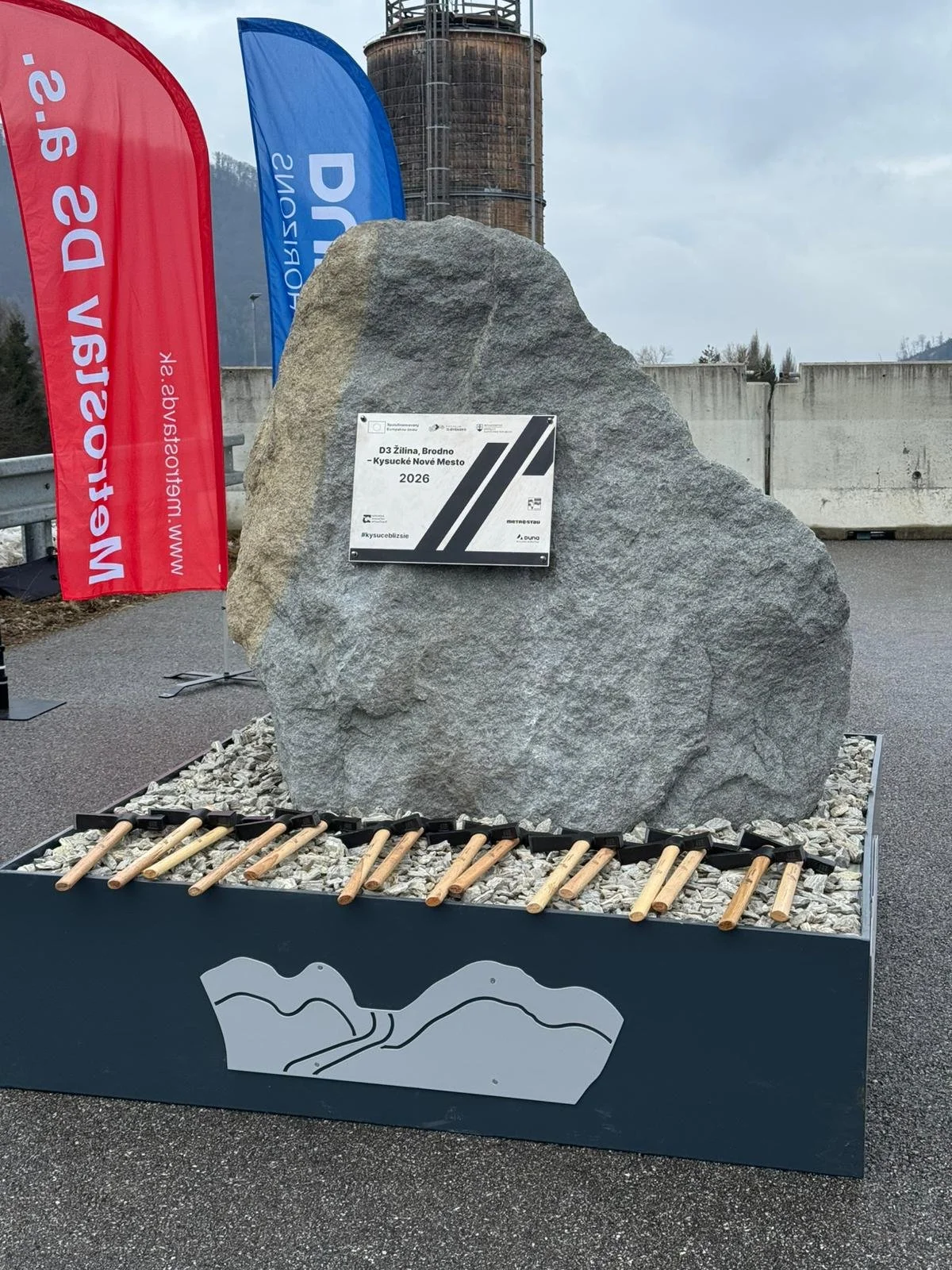
Construction of the D3 Highway Section Žilina – Kysucké Nové Mesto Officially Begins
At the same time, progress is also being made on the road network in the region. The construction site of the new D3 highway section connecting Žilina (Brodno) and Kysucké Nové Mesto has officially been handed over to the contractor. This 11.2-kilometre segment is the longest of the three ongoing Kysuce highway projects.
Despite the winter season, preparatory works have already started to ensure that construction can proceed without delays. Key features of the project include 16 bridges and one eco-duct, as well as significant traffic relief for surrounding villages. In Oškerda alone, traffic is expected to decrease by up to 12,000 cars and 6,000 trucks per day.
Construction is being carried out by the Váhostav – Metrostav – Duna Aszfalt consortium, and the project is financed by the Cohesion Fund.
This highway section forms part of the wider Kysuce D3 artery, which once completed will connect Žilina with Čadca. The full project will include nearly 60 new bridges, three interchanges and 40 kilometres of noise barriers. Beyond concrete and asphalt, the investment aims to improve road safety, traffic flow, regional development and the quality of life for local communities.
After years of anticipation, the Kysuce region is moving closer to a fully functional highway connection, bringing long-term benefits for residents, businesses and international transit.